Page 3 of 7
Posted: Thu Dec 07, 2006 8:23 pm
by SpudStuff
That isn't a good idea. You will probably end up ruining them.
Posted: Thu Dec 07, 2006 8:34 pm
by noname
Check that the fittings aren't cracked by holding a flashlight or something else inside it with all the lights off. If it is a crack, you'll see light coming through.
Posted: Thu Dec 07, 2006 8:37 pm
by PVC Arsenal 17
I traced this thing in black in one pic:
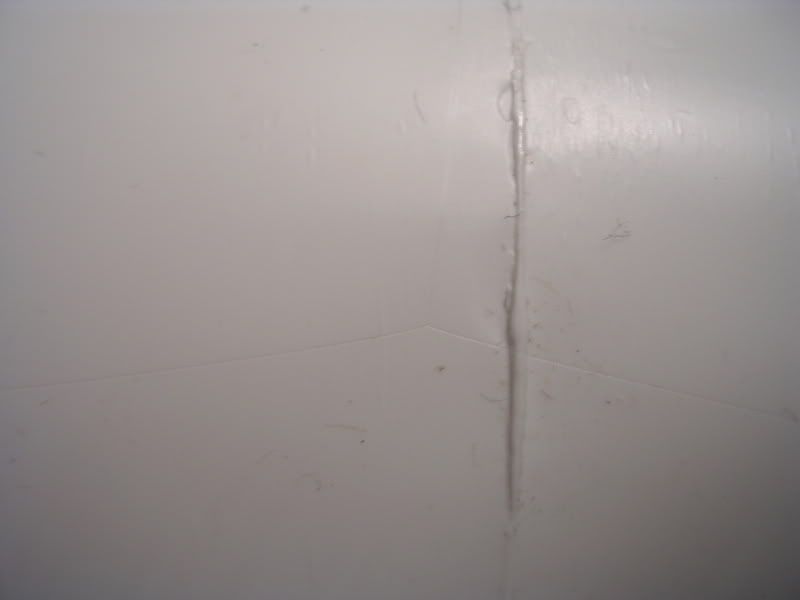
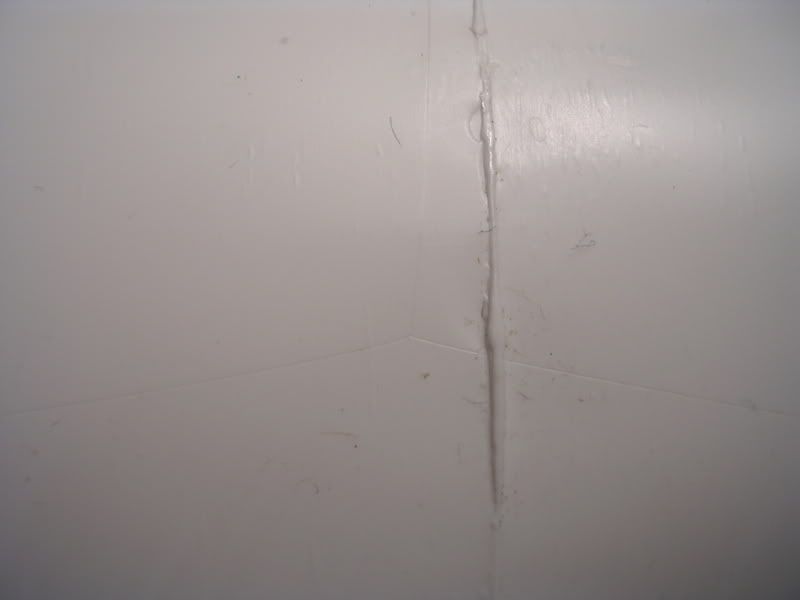
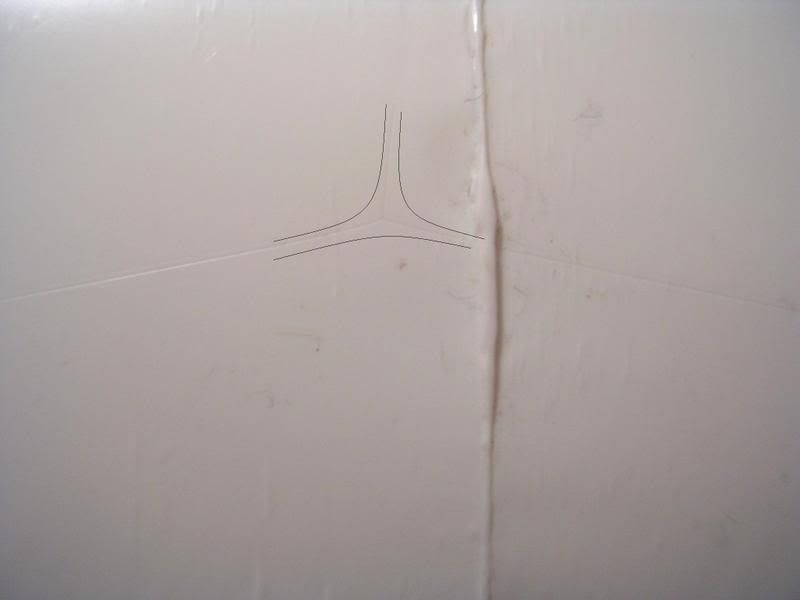
(Not the big seam obviously)
Posted: Thu Dec 07, 2006 8:42 pm
by noname
Never seen that before. Then again, I get different brand fittings. It looks fine though, the lines are wayyyy too straight to be a crack. I'd say it was something with the mold that the T was in had something in it or wrong with it.
Posted: Thu Dec 07, 2006 8:58 pm
by PVC Arsenal 17
But these lines are visible on the inside as well. You can feel them on both sides too.
Posted: Thu Dec 07, 2006 9:02 pm
by pyromanic13
I know at pressure it'll be alot more extreme... but why don't you plug up the ends then submerge it and look for bubbles?
Posted: Thu Dec 07, 2006 9:08 pm
by PVC Arsenal 17
I don't know... seems like a huge risk to take using them. I've contacted sprinkler.com and DURA about them.
Posted: Thu Dec 07, 2006 10:11 pm
by sgehring
The offer still stands. You helped me out when I needed help. I owe you. My 4 " daiphram valve is working great thanks to you. When I get it painted I'll get some pics on. I'd try the light idea in a dark room and see what if anything shines through. The putting it in water and looking for bubbles would probably show a smaller sized crack though and you could put some pressure on it by pushing it hard on the bottom of the container.
Posted: Fri Dec 08, 2006 6:47 am
by mark.f
I see you live in New Jersey, so there may not be that many hardware stores near you. Sorry about that.
I have never got fitttings like that, but it <I>may</I> be a faulty seam in their machines. It seems like if they inject the PVC material at pressure, if there is a bad seal in their mold, that will happen. I'm only familiar with injection molding, but PVC fittings may be made differently. I think they might machine the bottoming socket depths on the fittings, though. Is the crack in the middle of the tee, or is it where a fitting/pipe slides into it?
Also, good idea with the tee ideas for the chamber handle thingies. Less joints = good. We tried that for my friends DPC, but he didn't do it. I imagine once he took a look at the stop in the tee, and realized it went through all the way to the other side, and wasn't just a little ridge, he put down the dremel and just gave it up. A hole saw seems like it would work wonderfully, if it were the same OD as 4" pipe OD, (4.5"). I actually wanted to do this for my first piston valve, but that's different, as it would be holding pressure, (as yours aren't), which is why I gave up that design. I think you can still see it on my web site somewhere.
Posted: Fri Dec 08, 2006 6:55 am
by Velocity
Did you order that tee from mcmaster.com? I live in New Jersey too (about an hour away from mcmaster), and they always send me lasco fittings, which are pretty high quality (The pw lasco fittings actually have a deeper socket than the pw fittings at my hardware store)
Posted: Fri Dec 08, 2006 8:51 am
by nicholai
I know exactly what the problem is with that fitting...
PVC is an odd type of plastic, it does not need to be dry before it is molded (and yes the whole part is injection molded around 1800 psi injection pressure, 330 deg F, no machining whatsoever)
This is what happens when wet PVC is molded, most types of plastic like Nylon and Polycarbonate show signs of splay. Splaying looks like a bunch of bubbles whipped into the plastic part. Since PVC is not hydroscopic it does not suck up moisture, however, in this case it was really wet when molded. The molds used for this part are somewhat complex, they have cooling lines through the block and core inserts to cool the plastic and make sure the fitting sticks to the correct side of the mold prior to the ejection cycle. The front half of the mold is cooled (technically its heated, but since the plastic is over 300 deg. its actually cooling it) around 150 deg. while the back side is cooled around 120 deg.
It is more than likely that these cooling lines were leaking into the mold between cycles and some dripped into the mold cavity prior to when your part was molded. Dont get too poopey, the part should work fine from what I see, it doesn't really look too bad from the pictures. How bad is it on the inside?
Posted: Fri Dec 08, 2006 9:13 am
by ProfessorAmadeus
If it is even a semi deep crack or whatever I would'nt use them. Just use common sense and return them.
Posted: Fri Dec 08, 2006 3:18 pm
by PVC Arsenal 17
DURA told me that they are "knit lines" whatever that means... I'm most likely going to return them and get lasco fittings from mcmaster.
I'd rather wait a few more weeks than lose my arm. I really don't trust these parts.
Posted: Fri Dec 08, 2006 5:05 pm
by schmanman
yeah... the ones I got had nothing like that on them. they were just fine.


Posted: Fri Dec 08, 2006 5:53 pm
by PVC Arsenal 17
DURA is insisting that it's safe and so is my Dad.... I really don't know at this point. I'm still scared to keep them and use it on the gun.
I guess I can rule out all the risks by ordering all new stuff.