Page 1 of 1
solenoid valve
Posted: Thu Dec 11, 2008 5:00 pm
by POLAND_SPUD
I am a happy owner of this
http://allegro.pl/item492207383_elektro ... kazja.html
my question is.... How am I supposed to connect everything to pilot the QEV and to have a seperate low pressure circuit for double acting cylinder for semi auto? (I intend to use a simple homemade regulator made from shrader valves or something like that)
I assume that those who can answer the question know what am I talking about.... I planning to build a QEV semi auto.... double acting cylinder is meant to load ammo... I can use it both as a double acting cylinder or pump the other side with pressurised air so that it can act as an air spring
I am sure that I could figure it out anyway but I am way too tired.....
Posted: Thu Dec 11, 2008 5:25 pm
by VH_man
(Deleted by VH_man.... Why cant i Delete this post outright?)
Posted: Thu Dec 11, 2008 5:35 pm
by POLAND_SPUD
uhmmm you mean the valve( it's a 5 way solenoid valve) or the post?

Posted: Thu Dec 11, 2008 5:42 pm
by VH_man
the valve, Sorry....
5 Way solenoid Valve? Im jealous.......... And i didnt read the tile did I.... Woooowwww.
BTW, you only need a 3 way valve to make the gun Semi-Auto.... All you need is the Fill/Release method of the chamber. The cylinder is attached to the chamber, and when fired, The cylinder will retract.
Posted: Thu Dec 11, 2008 5:49 pm
by POLAND_SPUD
uhmmm I quite familiar with the concept... so I know how to use it with a 3 way valve.....
the real question is... how to use this valve to have a seperate circut for the cylinder ( so that it can operate at low pressure, that is ~10 bar... not 25 bar or more that the gun is going to be running at)
Posted: Thu Dec 11, 2008 6:01 pm
by VH_man
ahhhhhhhhh I see what your planning... Kinda like an autococker
If i were you, Id make the reloading cylinder completely independent of the trigger, and use some sort of Optoelectronic sensor on the tip of the barrel to tell some sort of electric timer to open and close the cylinder. that is, If you want to use electronics.
Also, I apologize for the first post there....... I shall delete it. I was in a bad mood..... Sorry you had to take the heat for it.
Posted: Thu Dec 11, 2008 6:16 pm
by POLAND_SPUD
relax I can understand that... besides the thread itself is pretty lame you know as I am close figuring it out myslef....
I suppose that putting an electroptical sensor is possible but I am sure that it can be done with just the valve... I have to get some sleep to undestand it....
EDIT
it seems that I was wrong.. I think it is doable with a manually actuated valve but mine is a soleniod one... it's a 5/2 solenoid spool valve (5 way / 2 positon valve)
the reason why it won't work is becasue my valve has to always have pressure at port
P otherwise it won't 'switch' (there is a small orfice there - I assume it's used for 'switching' the valve)
now... a diagram showing how it
could work...
forgive me its poor quality I hope it's comprehendable... I put both phases in one picture that's why there are two colored arrows showing how air flow through the valve...
*phase 2 is when I press the button/actuate the valve
*a cylinder can be either double acting with the other side filled with pressurised air or single acting
*Port 'P' was meant to be used as an exhaust for both the QEV and the cylinder
obviously I could have done more reaserch before ordering a valve.... the good thing is that I will find some use for it
Posted: Sat Dec 13, 2008 11:52 am
by POLAND_SPUD
I disasembled the valve just for the fun of doing it and to learn something... I am not good at taking pictures so sorry it's so dark

EDIT I increased gamma
EDIT no2 I fucked up the order of pics... but I think you understand what is what
Posted: Sun Oct 23, 2011 8:57 pm
by POLAND_SPUD
I guess I can say a thing or two about solenoid valves using this example.
Most valve bodies can handle a lot more than the valves are rated to. Unfortunatelly there are other limiting factors than that
See this plunger ? when you energize the solenoid it moves up and exposes that little hole. Air from one side of the spool valve vents to the atmosphere through that hole and the spool switches.

When you use pressures higher than recomended pressure will force the plunger up and air will leak.
If anyone wants to modify a valve like this one to use at higher pressures you'd need to replace the spring behind the plunger with a stronger one. Probably you'd have to use higher voltages too.
You can see similar valves (indirect acting) here
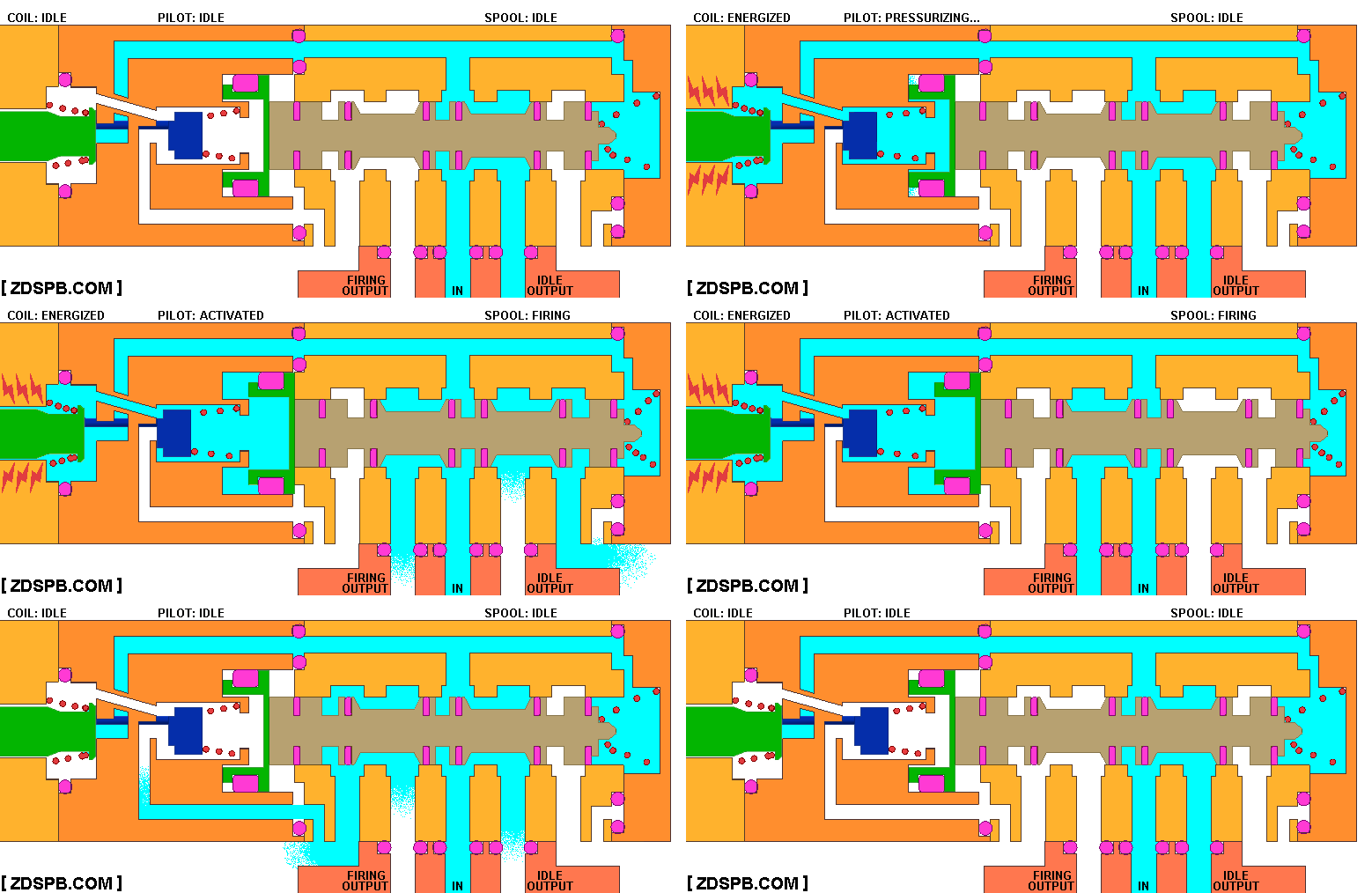
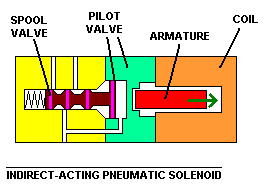
When it comes to direct acting valves.... so valves that look like this

...it is basically the same but there is no spool. The only valve in there is the plunger itself.

Posted: Sun Oct 23, 2011 11:39 pm
by jackssmirkingrevenge
Strona przedmiotu została przeniesiona do archiwum.
Więcej informacji o archiwizowaniu opisów przedmiotów.
Sounds rude
