Cartridge Loader: Overlap vs. No Overlap
Posted: Sat Apr 17, 2010 12:13 am
I discussed this briefly not too long ago, but I want some additional input before I go ahead and build anything.
Here's the situation:
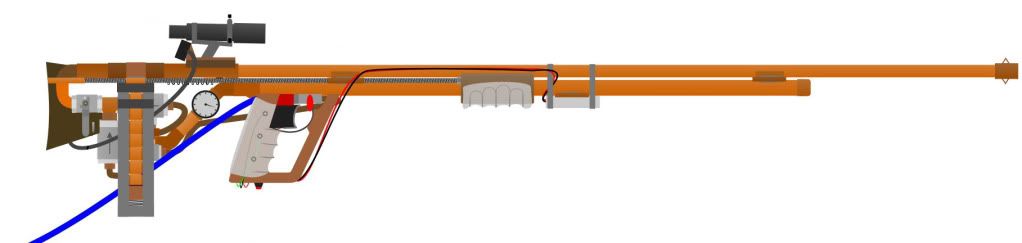
I am working on a semi-automatic Nerf gun that uses a rather simple shell-fed loading mechanism.
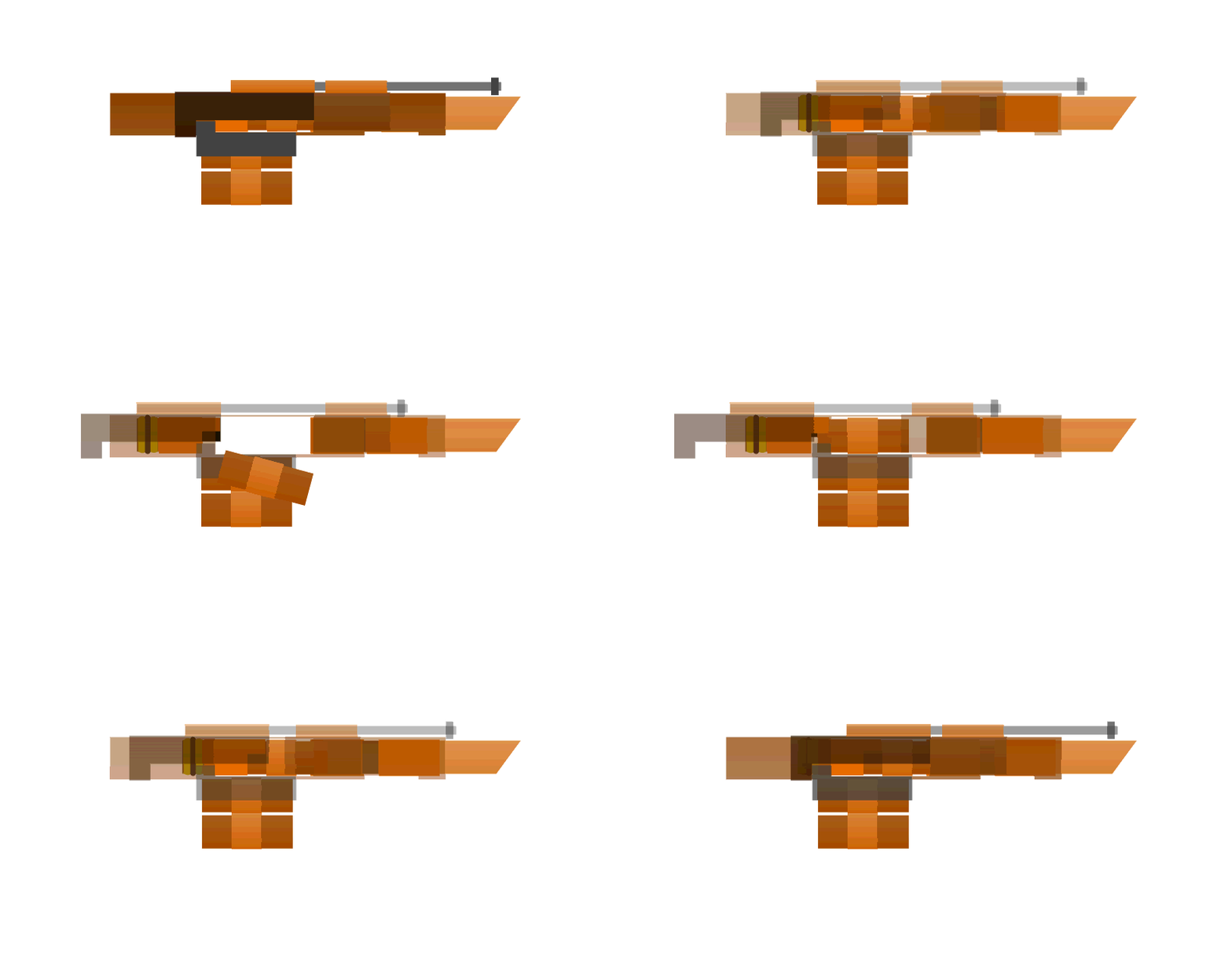
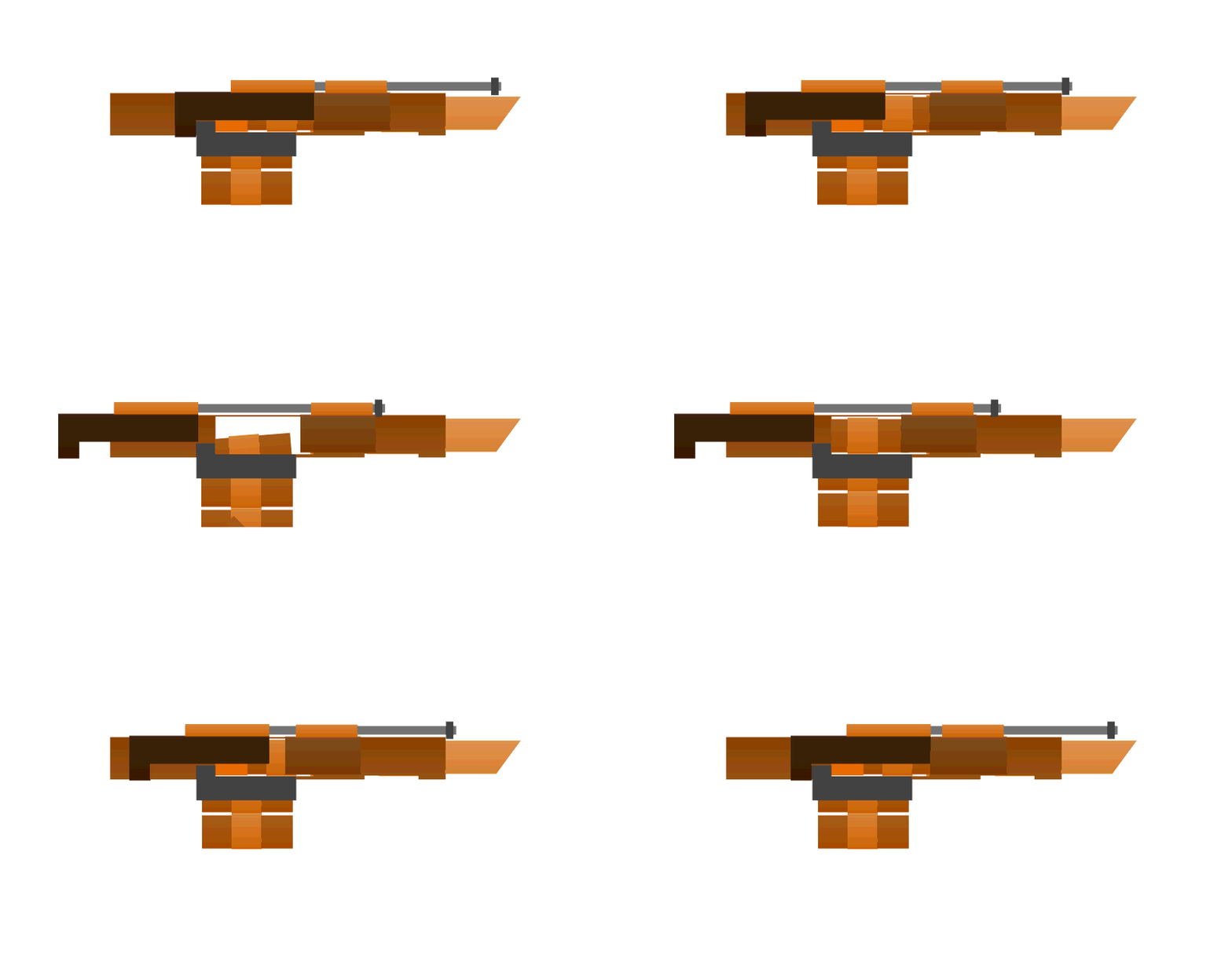
When the gun is not pressurized (immediately after firing, trigger still depressed), the bolt/barrel is pushed forward by a reverse acting (spring extend) cylinder and the breech is opened.
One shell then enters the gun from the bottom.
When the trigger is released, the gun pressurizes.
The bolt/barrel then gets pulled backwards, taking the newly loaded shell along with it to a location behind* where it entered the gun.
The bolt/barrel keeps constant pressure against the shell to seal itself against the shell and to seal the shell against the firing port.
The gun is now pressurized, loaded, and ready to fire.
When the trigger is depressed, air flows through the exhaust port and pushes the dart out through the shell and the barrel/bolt.
The barrel/bolt then starts moving forward again under spring pressure from the cylinder.
With the spent shell no longer locked against the firing port [and secured by the detent rod*], it is free to be ejected out of the right side by the ejection mechanism*.
The barrel/bolt continues to move forward until the breech is again exposed and a new shell enters.
The question is: How far back should the barrel/bolt push the newly loaded shell? 100% of its length from the place where it entered the gun? 50% (overlap)? More than 50%?
Possibly important to note: In my design, there is a detent rod (black line in diagrams) connected to the barrel/bolt and it prevents the shell from being able to fall out of the ejection port due to the ejection mechanism (simple spring loaded ramp that will get pushed out of the way by the shell as long as the shell is secured by the detent rod, but will push the shell out once the detent rod separates from the shell). In the diagrams, it's not shown exactly where it would be, so I've attached another diagram for clarification.
Advantages of Overlap:
-Shorter overall length of gun
-Shorter cylinder stroke necessary
-Easier to increase the distance the barrel/bolt travels forward from the breech (allows more time for shells to enter gun and could reduce jams)
-Possibly allows for loading through the ejection port when reloading a whole magazine is inconvenient. (Being that the barrel/bolt does move forward from the breech, a removable detent pin would be needed when loading so that shells are not pushed too far forward, preventing them from reentering the magazine.
Disadvantages of Overlap:
-Harder to build (cutting breech and ejection ports will be a bit challenging. Attaching a magazine the way I planned to would have to be adjusted.)
-Possibility that fresh shells could fall out of the ejection port after loading because they are at least 50% exposed and not yet secured by detent rod.
-Slight complications to my detent rod setup.
Advantages of No Overlap:
-Easier to build.
-Detent rod easily incorporated.
-Guaranteed shell security (no exposure to ejection port except when secured by detent rod)
Disadvantages of No Overlap:
-Overall length increased.
-Necessary cylinder stroke increased.
-Potentially less distance that bolt/barrel can travel forward from the breech which could lead to incomplete loading and jams)
-Loading through ejection port almost impossible.
Here's the situation:
I am working on a semi-automatic Nerf gun that uses a rather simple shell-fed loading mechanism.
When the gun is not pressurized (immediately after firing, trigger still depressed), the bolt/barrel is pushed forward by a reverse acting (spring extend) cylinder and the breech is opened.
One shell then enters the gun from the bottom.
When the trigger is released, the gun pressurizes.
The bolt/barrel then gets pulled backwards, taking the newly loaded shell along with it to a location behind* where it entered the gun.
The bolt/barrel keeps constant pressure against the shell to seal itself against the shell and to seal the shell against the firing port.
The gun is now pressurized, loaded, and ready to fire.
When the trigger is depressed, air flows through the exhaust port and pushes the dart out through the shell and the barrel/bolt.
The barrel/bolt then starts moving forward again under spring pressure from the cylinder.
With the spent shell no longer locked against the firing port [and secured by the detent rod*], it is free to be ejected out of the right side by the ejection mechanism*.
The barrel/bolt continues to move forward until the breech is again exposed and a new shell enters.
The question is: How far back should the barrel/bolt push the newly loaded shell? 100% of its length from the place where it entered the gun? 50% (overlap)? More than 50%?
Possibly important to note: In my design, there is a detent rod (black line in diagrams) connected to the barrel/bolt and it prevents the shell from being able to fall out of the ejection port due to the ejection mechanism (simple spring loaded ramp that will get pushed out of the way by the shell as long as the shell is secured by the detent rod, but will push the shell out once the detent rod separates from the shell). In the diagrams, it's not shown exactly where it would be, so I've attached another diagram for clarification.
Advantages of Overlap:
-Shorter overall length of gun
-Shorter cylinder stroke necessary
-Easier to increase the distance the barrel/bolt travels forward from the breech (allows more time for shells to enter gun and could reduce jams)
-Possibly allows for loading through the ejection port when reloading a whole magazine is inconvenient. (Being that the barrel/bolt does move forward from the breech, a removable detent pin would be needed when loading so that shells are not pushed too far forward, preventing them from reentering the magazine.
Disadvantages of Overlap:
-Harder to build (cutting breech and ejection ports will be a bit challenging. Attaching a magazine the way I planned to would have to be adjusted.)
-Possibility that fresh shells could fall out of the ejection port after loading because they are at least 50% exposed and not yet secured by detent rod.
-Slight complications to my detent rod setup.
Advantages of No Overlap:
-Easier to build.
-Detent rod easily incorporated.
-Guaranteed shell security (no exposure to ejection port except when secured by detent rod)
Disadvantages of No Overlap:
-Overall length increased.
-Necessary cylinder stroke increased.
-Potentially less distance that bolt/barrel can travel forward from the breech which could lead to incomplete loading and jams)
-Loading through ejection port almost impossible.