how much bigger?
Actually 40 cm of 2" tube for a 2 metre barrel sounds about right.

Your Potato Cannon Community


how much bigger?
hectmarr wrote:You have to make many weapons, because this field is long and short life
I'm not so sure rifling would be entirely effective if you're using taters as projectiles. If you had wax projectiles that could get into the grooves better I'd say yes, but I'm just not so sure about taters

well it is more effective accuracy-wise but its less effective range-wise. i think that range can be increased by using many shallow grooves and the accuracy can be further increased by using more specialised ammo that will grip the rifling.th3p0p0 wrote:I'm not so sure rifling would be entirely effective if you're using taters as projectiles. If you had wax projectiles that could get into the grooves better I'd say yes, but I'm just not so sure about taters
http://www.burntlatke.com/rifle150.html

hectmarr wrote:You have to make many weapons, because this field is long and short life
oh yeah! i never looked at it that wayjackssmirkingrevenge wrote:With rifling, some of the projectile's forward kinetic energy is being converted to rotational energy, so you're obviously going to lose some velocity due to barrel drag - which is why modern anti-tank cannon use smoothbored barrels and fin stabilised rounds
 although i would still use micro-rifling as fin stabalized spuds or wax ammo might be a bit challenging
 Typical UK thinking, the Brits stuck to their rifled tank barrels longer than any other nation, but have finally seen the lightALIHISGREAT wrote:oh yeah! i never looked at it that way
(though the argument was that when firing conventional full calibre shells, the rifled shots were more accurate)hectmarr wrote:You have to make many weapons, because this field is long and short life
hmm interesting stuff, but why do we not just use the saboted fin stabalized stuff in the rifled barrels, it would be the best of both worlds, maybe there would be a velocity decrease because of the rifling friction but they could just put a bigger charge inTypical UK thinking, the Brits stuck to their rifled tank barrels longer than any other nation, but have finally seen the light (though the argument was that when firing conventional full calibre shells, the rifled shots were more accurate)

The current state of the art is represented by the APFSDS, or Armour Piercing Fin Stabilised Discarding Sabot shot. This developed because it became apparent that a long thin shot loses less velocity and achieves better penetration than a conventional APDS shot. However, there is a limit to the length of shot which can be stabilised by rifling-induced spinning. It was therefore necessary to introduce tailfins to keep such long projectiles flying towards the target. As the rifling was not required (in fact, it destabilises the long projectiles), smoothbore barrels were developed which also permitted a higher velocity due to less drag. The British have resisted this development because of the resulting loss of accuracy when firing HESH shells, so have retained rifled barrels. Instead, slip rings on the sabot are utilised to minimise the spin rate imparted to the FS projectile. However, 120-125mm smoothbore tank guns have now become standard, achieving muzzle velocities of up to 5,500 fps.
hectmarr wrote:You have to make many weapons, because this field is long and short life
 )
) 

hectmarr wrote:You have to make many weapons, because this field is long and short life
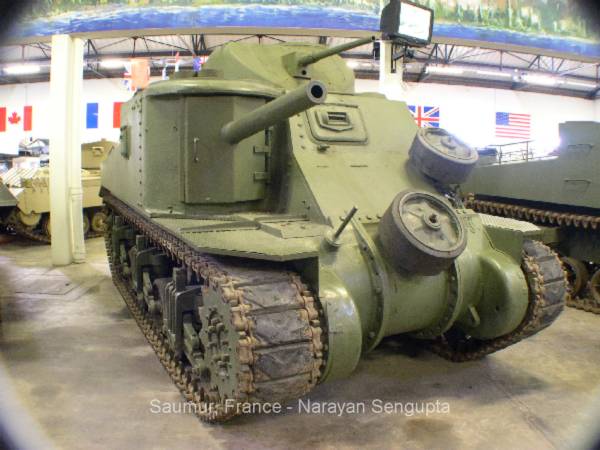
well this slightly off topic discussion has inspired me to make a saboted high velocity projectile when i get round to finishing my many other projectsjackssmirkingrevenge wrote:The Grant was a terrible idea - ever since saboted high velocity projectiles have been invented, as well as advanced shaped charge and squash head chemical armour piercing projectiles, the ideal tank has a single gun, long enough to give high velocity and wide enough to make its explosive shells effective.
(i'm a notorious non-finisher) so expect to see noobish questions posted about it in the near future hectmarr wrote:You have to make many weapons, because this field is long and short life
sounds like something i could boast about to my friends and display like a trophyThis is how I managed to penetrate a coin with a needle
 which launcher did you do it with? i might try with my 6mm 'sniper' although at the range i would shoot from it wouldn't be sniperish

You need to be a member in order to post a reply
Not a member? register to join our community
Members can start their own topics & subscribe to topics
It’s free and only takes a minute