Willdebeers wrote:I dare not ask how many litres of epoxy you have used!

Since I started messing with epoxy just over 10 years ago, about 15 litres.
How many projects have you tried?
Lots!
I have seen some of them and they seem very impressive. One question I have is how can you set such complicated structures in epoxy? Some of the valve designs seem ludicrous, yet you still manage to pull it off.
Experience, getting a good casting technique, patience, and the willingness to start over if you mess up.
Anyway,
times have changed 
Back to the subject of this thread, have you considered starting off with syringe metering? It's less complicated to set up than manometric metering and reliable if done right.
From another thread:
[youtube]
[/youtube]
For a hybrid mix, just multiply the resulting fuel volume by whatever mix number you want to achieve.
It's important that you consider the dead space after the check valve of your pump to be part of the chamber volume when making your calculations, especially for small chambers.
The calculation is as follows:
(ideal fuel % / 100) x (chamber + pump dead volume) x mix number
In the case of
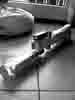
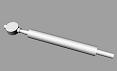
this Beto shock pump, the dead volume is 1.75mL. For a 10mL chamber using butane to say 5x, the calculation is as follows:
3/100 x (10+1.75) x 5 = 1.76mL of butane
Had we not considered the pump dead volume, the result would have been 1.5mL of fuel, an error of 15% which would most likely prevent ignition. If it were a 100mL chamber on the other hand, the error would have been of 1.5%, and likely the mix would have still ignited.
After the fuel is injected, all you have to do is pressurise with your pump to the following pressure (assuming you're using psi):
(mix number - 1) x 14.7
In the case of our 5x mix, the calculation is as follows:
(5-1) x 14.7 = 59 psi
If your gauge can read bar, simply pressurise to (mix number - 1) bar, so 4 bar in this case.